

 Hospital Furniture
 Medical Devices
 MSR Products
 Office Furniture
Nebulizer machines are vital respiratory devices designed to deliver medication directly into the lungs through inhalation. They play a crucial role in the management of asthma, COPD, bronchitis, and other respiratory conditions. This catalog presents the 10 major categories of nebulizer machines, with history, specifications, annotated diagrams, applications, compliance, maintenance, pricing tiers, and customization options.
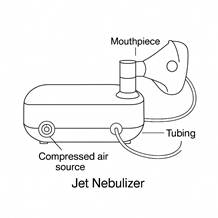
Jet Nebulizer
History: Jet Nebulizers were developed to improve respiratory care and efficiency.
Short Specifications:
– Medication cup 2–10 ml
– Particle size 1–5 microns
– Noise level <50 dB
– Power source: AC/battery/USB
Jet Nebulizer – Annotated Diagram
Ultrasonic Nebulizer
History: Ultrasonic Nebulizers were developed to improve respiratory care and efficiency.
Short Specifications:
– Medication cup 2–10 ml
– Particle size 1–5 microns
– Noise level <50 dB
– Power source: AC/battery/USB
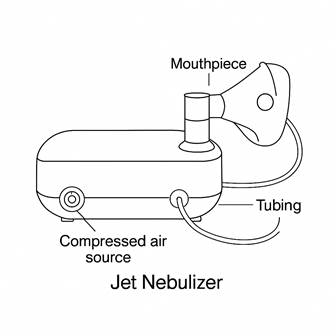
Ultrasonic Nebulizer – Annotated Diagram
Mesh Nebulizer
History: Mesh Nebulizers were developed to improve respiratory care and efficiency.
Short Specifications:
– Medication cup 2–10 ml
– Particle size 1–5 microns
– Noise level <50 dB
– Power source: AC/battery/USB
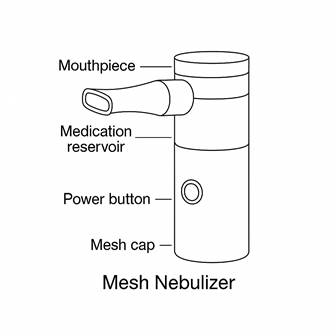
Mesh Nebulizer – Annotated Diagram
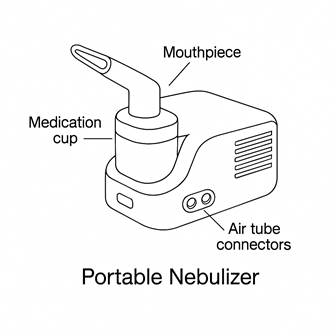
Portable Nebulizer
History: Portable Nebulizer were developed to improve respiratory care and efficiency.
Short Specifications:
– Medication cup 2–10 ml
– Particle size 1–5 microns
– Noise level <50 dB
– Power source: AC/battery/USB
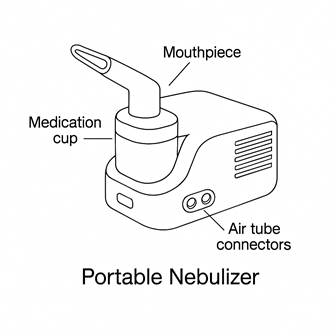
Portable Nebulizer – Annotated Diagram
Pediatric Nebulizer
History: Pediatric Nebulizer were developed to improve respiratory care and efficiency.
Short Specifications:
– Medication cup 2–10 ml
– Particle size 1–5 microns
– Noise level <50 dB
– Power source: AC/battery/USB
Pediatric Nebulizer – Annotated Diagram
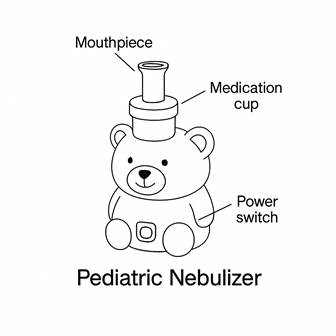
Hospital-Grade Nebulizer
History: Hospital-Grade Nebulizer were developed to improve respiratory care and efficiency.
Short Specifications:
– Medication cup 2–10 ml
– Particle size 1–5 microns
– Noise level <50 dB
– Power source: AC/battery/USB
Hospital-Grade Nebulizer – Annotated Diagram
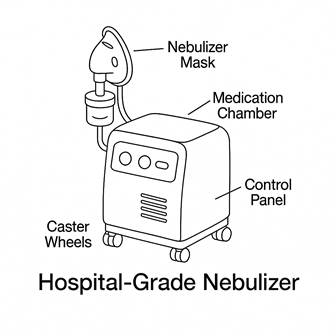
Compressor Nebulizer
History: Compressor Nebulizer were developed to improve respiratory care and efficiency.
Short Specifications:
– Medication cup 2–10 ml
– Particle size 1–5 microns
– Noise level <50 dB
– Power source: AC/battery/USB
Compressor Nebulizer – Annotated Diagram
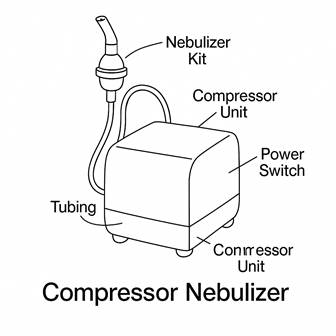
Oxygen-Conserving Nebulizer
History: Oxygen-Conserving Nebulizer were developed to improve respiratory care and efficiency.
Short Specifications:
– Medication cup 2–10 ml
– Particle size 1–5 microns
– Noise level <50 dB
– Power source: AC/battery/USB
Oxygen-Conserving Nebulizer – Annotated Diagram
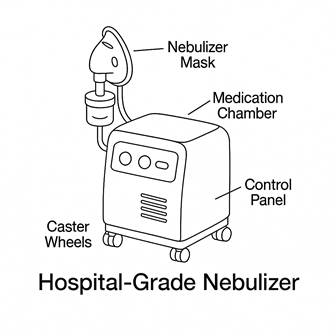
Vibrating Mesh Nebulizer
History: Vibrating Mesh Nebulizers were developed to improve respiratory care and efficiency.
Short Specifications:
– Medication cup 2–10 ml
– Particle size 1–5 microns
– Noise level <50 dB
– Power source: AC/battery/USB
Vibrating Mesh Nebulizer – Annotated Diagram
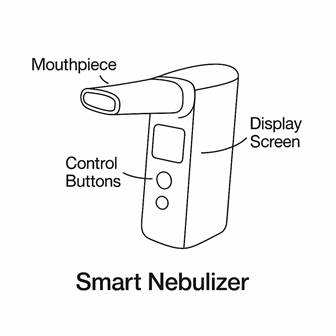
Smart Nebulizer
History: Smart Nebulizer were developed to improve respiratory care and efficiency.
Short Specifications:
– Medication cup 2–10 ml
– Particle size 1–5 microns
– Noise level <50 dB
– Power source: AC/battery/USB
Smart Nebulizer – Annotated Diagram
Introduction / Overview
Nebulizer machines are essential devices for delivering aerosolized medications directly to the lungs. They are widely used in the treatment of asthma, COPD, bronchitis, and other respiratory illnesses. This section provides an introduction to their role and significance in modern healthcare.
Applications & End Users
Nebulizers are used by a diverse range of patients and facilities:
– Jet nebulizers: Standard use in clinics and hospitals
– Ultrasonic nebulizers: Fast treatments for adults
– Pediatric nebulizers: Children’s hospitals and home care
– Hospital-grade nebulizers: Intensive care and inpatient facilities
– Smart nebulizers: Remote monitoring and digital tracking
Compliance & Standards
Nebulizers must comply with international and national standards:
– ISO 13485 certification
– CE Marking (Europe)
– FDA clearance (United States)
– DGDA/BSTI (Bangladesh)
– Biocompatibility and safety requirements
Maintenance & After-Sales Service
Proper maintenance ensures safe and effective operation:
– Clean and disinfect after each use
– Replace tubing, masks, and medication cups periodically
– Check filters, mesh, and ultrasonic elements
– Use warranty and service contracts for long-term care
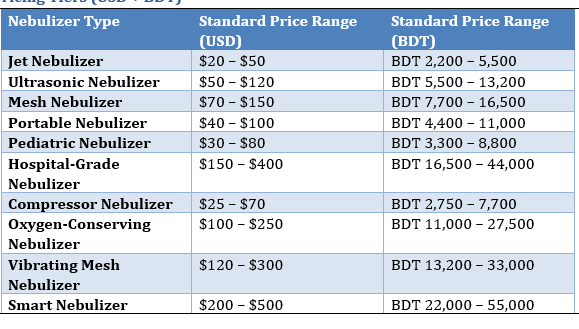
Pricing Tiers (USD + BDT)
Customization Options
Customization options available include:
– Pediatric-friendly designs
– Noise reduction
– Battery, rechargeable, or AC power
– Mask sizes for adults, children, and infants
– Integrated oxygen compatibility
– Smart monitoring and connectivity features
Conclusion
Nebulizer machines are vital tools in modern respiratory healthcare. With wide-ranging applications, strict compliance with international standards, defined maintenance protocols, and diverse customization options, they serve both hospitals and home-based patients effectively. Dual pricing in USD and BDT ensures flexibility for local and international markets.
Mousumi Islam
Entrepreneur | Business Leader | Policy Advocate | Global Connector | Champion of Women’s Empowerment | Social Visionary | Maritime & Blue Economy Leader | Healthcare & Medical Devices Industry Leader