

 Hospital Furniture
 Medical Devices
 MSR Products
 Office Furniture
When families search for electric vs manual hospital beds, their main concerns usually include comfort, budget, and ease of use. Choosing the right hospital bed is one of the most important decisions for caregivers and families providing home care. The comparison of electric vs manual hospital beds often comes up because both types serve the same purpose—supporting patient recovery and ensuring safety—yet they differ greatly in features, cost, convenience, and long-term benefits. When comparing electric vs manual hospital beds, families should also consider the emotional and physical impact on both patients and caregivers. Electric beds not only reduce the physical strain of constant adjustments but also give patients a sense of independence by allowing them to control their position with ease. On the other hand, manual beds can still provide reliable support, especially for short-term recovery needs. However, they may require more effort from caregivers, which can become challenging over time. Evaluating lifestyle, long-term care goals, and budget together helps ensure the right decision is made for overall comfort and safety.
Why Choosing the Right Hospital Bed Matters
The choice between manual hospital beds and electric hospital beds directly impacts patient comfort, caregiver workload, and long-term recovery outcomes. A well-suited bed provides proper positioning, reduces the risk of bedsores, and allows patients to rest with dignity. For caregivers, the right bed reduces physical strain and makes day-to-day tasks more manageable .According to the Mayo Clinic’s guide on patient positioning, proper bed adjustments can prevent bedsores and improve circulation, which highlights the importance of choosing the right hospital bed.
Manual Hospital Beds: Affordable and Reliable
Manual hospital beds remain a practical choice for families looking for budget-friendly solutions. They are adjusted using hand cranks, which means caregivers must physically raise or lower sections of the bed. While they require more effort, manual hospital beds are dependable and cost-effective, making them ideal for short-term recovery or temporary home care situations.
Electric Hospital Beds: Comfort and Independence
In contrast, electric hospital beds offer convenience, comfort, and independence. Patients can adjust their bed position with a simple remote control, often without caregiver assistance. This feature empowers patients to feel more independent while reducing the caregiver’s workload. Although electric hospital beds are more expensive, they often prove valuable for long-term care and chronic conditions, providing better overall well-being.
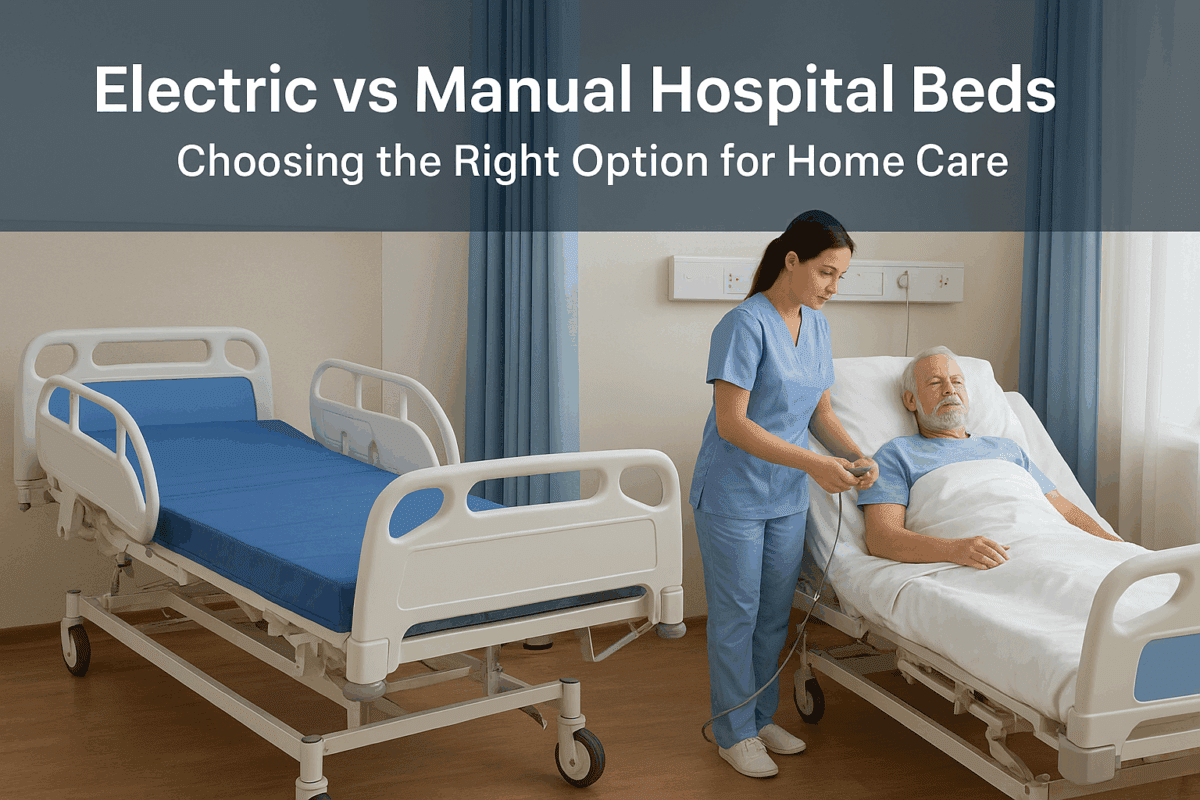
Key Differences Between Electric vs Manual Hospital Beds
| Feature | Manual Hospital Bed | Electric Hospital Bed |
|---|---|---|
| Cost | Affordable | Higher investment |
| Ease of Use | Caregiver effort needed | Remote-controlled |
| Patient Independence | Limited | High |
| Maintenance | Low | Moderate/High |
| Best Suited For | Short-term home care | Long-term & chronic care |
This side-by-side comparison shows how electric vs manual hospital beds differ in usability and suitability. Families should weigh these factors before making a decision.When deciding between electric vs manual hospital beds, caregivers should also think about the patient’s long-term recovery environment. Electric hospital beds are particularly useful for patients who need frequent repositioning to prevent bedsores, as adjustments can be made instantly. Manual beds, while cost-effective, may require extra physical effort from caregivers. Considering the patient’s medical needs, comfort preferences, and the caregiver’s capacity ensures the right choice is made.
Long-Term Benefits to Consider
When comparing electric vs manual hospital beds, it’s essential to consider the long-term benefits. Manual hospital beds save money upfront but require more caregiver involvement. On the other hand, electric beds reduce strain, enhance patient independence, and promote comfort over time. While the initial cost is higher, the long-term value often outweighs the expense.
Conclution
Ultimately, choosing between electric vs manual hospital beds depends on finding the right balance of comfort, independence, and affordability. For long-term patients, electric beds deliver consistent benefits, including reduced caregiver strain and improved patient dignity. Manual hospital beds, while more affordable, are best suited for short-term recovery or families with tight budgets. Before making a final decision, families should evaluate the patient’s medical condition, lifestyle, and caregiving support. Investing in the right hospital bed ensures better healing, safety, and peace of mind at home.
Final Thoughts
Ultimately, the decision between electric vs manual hospital beds comes down to balancing budget, patient needs, and caregiver convenience. For families managing short-term recovery, manual hospital beds are a solid choice. However, for those seeking long-term comfort and reduced caregiver strain, electric hospital beds are often the best investment.
At Promixco Ltd., we specialize in providing both electric and manual hospital beds to ensure every family finds the right solution for home care. Whether you prioritize affordability or advanced comfort, our team can guide you in selecting the best hospital bed for your loved ones.