Every decision a healthcare administrator makes carries weight. Staffing ratios, procurement policies, clinical protocols, capital investment priorities — each choice ripples outward, affecting patient outcomes, staff wellbeing, operational efficiency, and institutional reputation. Some of these decisions are obviously high-stakes. Others appear routine but turn out to matter enormously.
Furniture procurement sits firmly in the second category.
It does not look like a consequential decision from the outside. Beds, chairs, tables, storage units — these seem like logistical details, the kind of thing that can be delegated to a facilities manager and handled through a standard tender process with price as the primary variable. But healthcare administrators who have made that mistake once rarely make it twice. They have seen what happens when furniture fails: the patient who falls because a bed could not be lowered far enough, the infection that spread across a ward because surfaces could not be properly cleaned, the nurse who went on long-term sick leave with a back injury caused by a bed at the wrong working height, the family who felt unwelcome because there was nowhere comfortable to sit.
This guide is for the healthcare administrator who wants to get furniture procurement right — not just adequate, but genuinely right. It covers the strategic framework for making good decisions, the clinical and operational criteria that should drive specifications, the financial analysis that reveals true value, and the process considerations that determine whether a procurement delivers what it promises.
Start With Strategy, Not Specifications
The most common mistake in hospital furniture procurement is beginning with specifications — a list of features, dimensions, weight ratings, and material requirements — before establishing a clear strategic framework for what the furniture needs to achieve.
Specifications without strategy produce furniture that ticks boxes without serving purpose. A bed can meet every technical specification and still be poorly suited to the patient population it serves, difficult for nursing staff to operate efficiently, impossible to clean to the standard the infection control team requires, or incompatible with the clinical workflows of the unit it is placed in.
Before writing a single specification, a healthcare administrator should be able to answer four strategic questions.
First, who are we serving? The patient population of an acute general ward is fundamentally different from that of a pediatric oncology unit, a geriatric rehabilitation center, or a day surgery facility. Age distribution, acuity levels, average length of stay, physical and cognitive characteristics, cultural backgrounds, and family involvement patterns all shape what furniture needs to do and how it needs to do it. Furniture chosen without a clear picture of the patient population it serves is furniture chosen in the dark.
Second, what are our clinical priorities? Different clinical environments have different hierarchies of need. In an intensive care unit, the ability to rapidly reposition patients and integrate with complex medical equipment takes precedence over almost everything else. In a palliative care setting, comfort, warmth, and homeliness are the primary values. In a rehabilitation ward, furniture must actively support the process of regaining function. Knowing your clinical priorities allows you to make intelligent trade-offs when — as always happens — competing requirements must be balanced.
Third, what are our operational constraints? Space limitations, cleaning protocols, staffing models, maintenance capabilities, and existing infrastructure all constrain what furniture can realistically deliver. A sophisticated smart bed that requires specialist technical maintenance to operate and update is a liability if your facilities team does not have that expertise. Furniture that requires two-person operation is a problem if your unit is routinely staffed at levels where two people cannot always be deployed simultaneously. Operational realities must shape procurement decisions, not be discovered after contracts are signed.
Fourth, what is our investment horizon? Hospital furniture is a long-term capital investment, and decisions made today will shape your clinical environment for a decade or more. Understanding your investment horizon — how long you expect this furniture to serve, what your replacement cycle looks like, and how you expect your clinical needs to evolve over that period — is essential to making procurement decisions that deliver value over time rather than just at the point of purchase.
Build a Multidisciplinary Procurement Team
Furniture procurement decisions made by administrators alone, without meaningful input from the clinical and operational staff who will live with those decisions every day, consistently produce worse outcomes than decisions made collaboratively.
A well-constituted hospital furniture procurement team should include representation from nursing leadership, who understand both patient needs and clinical workflow requirements better than anyone else in the institution. Infection control specialists must be involved from the earliest stages, not brought in at the end to review specifications that have already been written. Occupational therapists and physiotherapists bring invaluable expertise on how furniture supports or hinders patient mobility and rehabilitation. Facilities and maintenance teams know what can realistically be cleaned, maintained, and repaired with available resources. Finance must be part of the conversation from the beginning, not just at the point of budget approval.
Patient and family representatives are increasingly recognized as essential voices in healthcare design decisions, including furniture procurement. Patients who have experienced care in your institution bring perspectives that no clinical or operational professional can fully replicate. Their input on what made them feel safe, comfortable, and respected — or the opposite — is procurement intelligence of the highest value.
Some institutions are now also including sustainability officers in procurement teams, reflecting the growing importance of environmental criteria in purchasing decisions. If your institution has made commitments on carbon reduction, waste minimization, or circular procurement, those commitments need to be represented in the room where furniture decisions are made.
Clinical Criteria: The Non-Negotiables
With a strategic framework established and a procurement team in place, the work of developing clinical criteria can begin. These are the non-negotiable requirements that any furniture under consideration must meet before other factors are assessed.
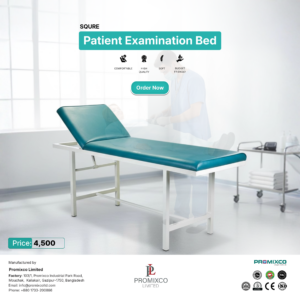
For patient beds, clinical non-negotiables typically include appropriate weight capacity for the patient population, height adjustment range that accommodates both clinical working height for staff and floor-level positioning for fall prevention, pressure management capabilities appropriate to the acuity and risk profile of the patient population, side rail design that meets safety standards without creating entrapment risks, and integration capability with monitoring and nurse call systems. Any bed that cannot meet these criteria should be eliminated from consideration regardless of price or other features.
For patient seating, clinical non-negotiables include appropriate seat height for safe patient transfers, armrest design that provides adequate support for standing and sitting, materials that meet infection control requirements, weight capacity appropriate to the patient population, and stability under lateral loading — meaning the chair does not tip or slide when a patient pushes against it for support.
For overbed tables, clinical non-negotiables include height adjustment range, surface stability under load, wheel locking reliability, surface material cleanability, and edge design that does not create injury risk for patients who lean against the table for support.
These non-negotiables should be established by the clinical members of your procurement team, not by administrators or finance. They represent the minimum acceptable standard of clinical performance, and procurement processes that allow furniture to pass this bar on the basis of cost alone are procurement processes that will eventually produce a serious adverse event.
Infection Control: A Dedicated Assessment
Infection control deserves its own dedicated assessment process within furniture procurement, not simply a line in a general specification document. The consequences of furniture that cannot be adequately decontaminated are too serious — and too expensive — to treat as a secondary consideration.
Your infection control team should assess every candidate furniture product against several dimensions. Surface porosity and permeability determine whether pathogens can penetrate below the surface or are confined to the area that cleaning agents can reach. Seam and joint design determines whether there are crevices where contamination can accumulate. Material compatibility with the full range of disinfectants used in your institution — including sporicidal agents for Clostridium difficile decontamination — must be verified with manufacturer test data, not assumed. Ease and speed of cleaning in real clinical conditions — not under ideal laboratory conditions — must be assessed, ideally through observation of cleaning staff working with actual product samples.
Ask manufacturers for independent test data on antimicrobial performance and cleaning agent compatibility. Ask for references from other healthcare institutions using the product and speak directly with those institutions’ infection control teams about their real-world experience. Be skeptical of marketing claims about antimicrobial properties that are not supported by independent verification. The infection control assessment of hospital furniture is not the place for marketing literature — it is the place for science.
Total Cost of Ownership: The Only Honest Financial Analysis
Price-based procurement — selecting furniture primarily on the basis of purchase price — is one of the most expensive mistakes a healthcare institution can make. The purchase price of hospital furniture represents only a fraction of its true cost over its operational lifetime. A rigorous procurement process must analyze total cost of ownership across the full expected life of the product.
Total cost of ownership includes the purchase price, but it also includes installation and commissioning costs, staff training costs, ongoing maintenance and repair costs, replacement parts costs, the cost of cleaning consumables required, and the eventual cost of disposal or recycling at end-of-life. It must also account for the costs — direct and indirect — of clinical failures attributable to furniture performance. A bed that contributes to a fall and subsequent hip fracture generates costs in extended length of stay, potential litigation, regulatory scrutiny, and reputational damage that dwarf any savings made on purchase price.
Ask manufacturers for maintenance cost data and reliability records from existing installations. Request information on parts availability and lead times — furniture that requires imported parts with long lead times for critical components creates operational vulnerabilities. Ask for data on average product lifespan under conditions comparable to your intended use.
Calculate the cost-per-patient-day over the expected product lifespan for competing options. A product that costs thirty percent more to purchase but lasts fifty percent longer and has lower maintenance costs will almost always be the better financial decision. Making that case clearly — with numbers — to finance and governance is one of the most important contributions an administrator can make to a furniture procurement process.
Evaluating Suppliers, Not Just Products
The furniture itself is only part of what you are procuring. You are also procuring a relationship with a supplier, and the quality of that relationship will significantly affect your experience over the product’s lifetime.
Evaluate suppliers on their financial stability and track record. A manufacturer that goes out of business three years into a fifteen-year product lifecycle leaves you without parts, technical support, or warranty coverage. Supplier longevity and financial health are legitimate procurement criteria.
Evaluate suppliers on their service and support capabilities. What does their maintenance and repair service look like? Do they have technicians who can respond within acceptable timeframes when equipment fails? Do they offer preventive maintenance contracts, and what do those contracts cover? What is their track record on warranty claims — do they honor commitments or dispute them?
Evaluate suppliers on their training and implementation support. Furniture that staff cannot use effectively is furniture that will not perform to specification. What training does the manufacturer provide at installation? Is ongoing training available as new staff join? Is there accessible technical documentation for facilities teams?
Evaluate suppliers on their innovation trajectory. Will this manufacturer be a relevant partner in five years? Are they investing in research and development? Do they have a credible roadmap for integrating new technologies and incorporating new clinical evidence into their product development? A supplier relationship with a manufacturer that is standing still technologically is a relationship that will constrain your institution’s ability to evolve its clinical environment.
Piloting Before Committing
No procurement evaluation, however rigorous, fully replicates the experience of using furniture in real clinical conditions with real patients and real staff. Before committing to a large-scale procurement, healthcare institutions should insist on a structured pilot program.
A well-designed furniture pilot places candidate products in a representative clinical environment for a defined period — typically three to six months — and systematically collects feedback from patients, nursing staff, cleaning staff, and facilities teams. It tracks quantitative data where possible: cleaning times, maintenance calls, staff injury incidents, patient satisfaction scores. It captures qualitative feedback through structured interviews and observation.
The pilot should be designed and managed by the procurement team, not by the manufacturer. Manufacturers have an obvious interest in presenting their products favorably; the institution has an interest in finding out the truth. Ensure that clinical and cleaning staff feel genuinely free to report problems and that negative feedback is welcomed and acted upon rather than explained away.
Pilot results should be reported to the full procurement team and should carry significant weight in final procurement decisions. A product that performs beautifully in laboratory testing and supplier demonstrations but generates consistent negative feedback from nursing staff during a pilot has told you something important. Listen to it.
Sustainability and Ethical Procurement
Healthcare institutions have a responsibility that extends beyond their immediate patients and communities. Furniture procurement decisions made at scale — across a large hospital system — have meaningful environmental and social consequences, and those consequences deserve consideration in the procurement process.
On environmental sustainability, assess products against their full lifecycle environmental impact. Prioritize products made from recycled or sustainably sourced materials, manufactured with verified environmental management systems, designed for durability and repairability, and recoverable at end-of-life through take-back programs or recyclable material streams. Ask manufacturers for environmental product declarations and hold them to account for the claims those declarations make.
On ethical supply chain standards, ensure that manufacturers can demonstrate responsible sourcing of raw materials and fair labor practices throughout their supply chains. Healthcare institutions that procure furniture made under exploitative labor conditions in supply chains they have not scrutinized are institutions whose values stop at their own walls.
These criteria may not be the deciding factors in every procurement decision, but they should be part of every procurement conversation. They are part of what it means to be a responsible institution.
Conclusion
Choosing the right hospital furniture is a complex, multidimensional, high-stakes decision that deserves to be treated with the same rigor and seriousness as any other major clinical or capital investment decision. It requires strategic clarity, multidisciplinary collaboration, honest financial analysis, rigorous clinical evaluation, and a commitment to the long view.
The administrator who approaches furniture procurement this way — who insists on asking the hard questions, who builds the right team, who looks beyond purchase price to total value, who pilots before committing, and who holds suppliers accountable — is the administrator who builds clinical environments that truly serve their patients, their staff, and their institution.
The furniture in your hospital is not background. It is part of the care. Choose it accordingly.