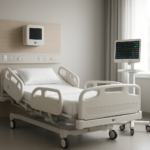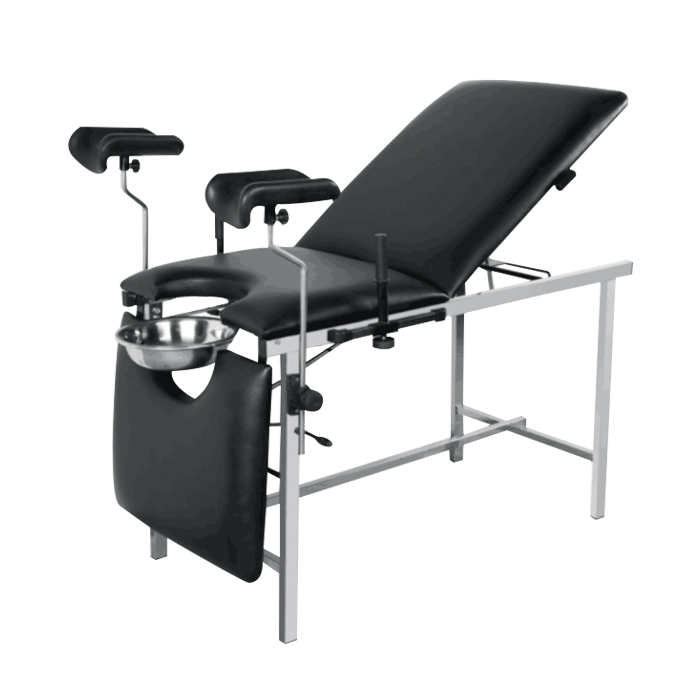
Healthcare has always been judged by outcomes, but increasingly it’s also being judged by footprint. Hospitals operate around the clock, consuming enormous resources over their operational life, and the furniture inside them — beds, cabinets, trolleys, seating — is a meaningful part of that consumption story. Sustainable manufacturing in medical furniture has moved from a niche talking point to something a majority of healthcare professionals actively expect from their suppliers, and Promixco Limited has built its manufacturing approach around exactly that shift.
This article looks at what sustainable manufacturing actually means in the context of hospital furniture, and how Promixco Limited applies those principles across material selection, production, and product design.
Why Sustainability Matters More in Medical Furniture Than It Might Seem
Hospital furniture faces a uniquely demanding set of constraints that most sustainable furniture guidance — built around home or office furniture — doesn’t fully account for. It has to withstand constant use, frequent aggressive disinfection, and heavy daily traffic, all while meeting strict safety and hygiene standards. Traditional approaches to hospital furniture manufacturing often leaned on plastics, synthetic foams, and adhesives or coatings that were durable but came with real environmental costs: high manufacturing carbon footprints, non-biodegradable waste at end of life, and volatile organic compounds that can affect indoor air quality inside the very facilities meant to protect people’s health.
Balancing durability and hygiene against genuine environmental responsibility is a harder design problem in healthcare than in almost any other furniture category — which is exactly why a manufacturer’s approach to it matters.
Responsible Material Selection
Promixco Limited integrates sustainability into its manufacturing approach starting with material choice — prioritizing responsibly sourced inputs rather than defaulting to whatever is cheapest or most familiar. In the broader medical furniture industry, this typically means favoring options like recycled metals, which reduce mining impact while still meeting the durability and hygienic performance hospital furniture requires, alongside low-VOC finishes and coatings that protect indoor air quality without compromising the disinfection resistance clinical furniture depends on.
The goal isn’t to chase an “eco” label for its own sake — most such labels, without real certification behind them, add little value. It’s to choose materials that hold up to real hospital use while genuinely reducing the environmental cost of production and eventual disposal.
Efficient, Waste-Conscious Production Processes
Sustainable manufacturing isn’t only about what goes into a product — it’s equally about how that product gets made. Promixco Limited’s approach emphasizes efficient production processes designed to reduce waste and energy use across the manufacturing line, rather than treating environmental impact as something to address only after production is complete.
This kind of production discipline has a practical payoff beyond environmental benefit: manufacturers that reduce waste and improve energy efficiency during production typically see real reductions in operational costs as well, meaning sustainable manufacturing and cost-effective manufacturing aren’t competing goals — they tend to move together.
Designing for Durability, Repairability, and Recyclability
Perhaps the most consequential sustainability decision a hospital furniture manufacturer makes happens at the design stage, long before a single unit is produced. Promixco Limited’s furniture is designed with durability, repairability, and recyclability built in from the start — a philosophy grounded in a simple but often overlooked truth: a well-made piece of furniture that lasts for decades is more sustainable than any lightweight, quickly-replaced alternative marketed as “green.”
This shows up in a few concrete ways:
Durability that extends replacement cycles. Furniture built to withstand years of heavy clinical use reduces how often a hospital needs to replace it — and every avoided replacement cycle avoids the material extraction, manufacturing energy, and transportation emissions that a new unit would require.
Repairable construction. Furniture designed so that individual components — motors, wheels, side rails — can be serviced or replaced rather than requiring full unit replacement extends usable life significantly and reduces the volume of furniture that ends up discarded prematurely due to one failed part.
End-of-life recyclability. Designing furniture with material choices and construction methods that support recycling at the end of its usable life reduces the non-biodegradable waste burden that traditional hospital furniture — often built with mixed plastics and synthetic composites that are difficult to separate and recycle — has historically created.
Sustainability’s Role in Patient and Staff Experience
Sustainable manufacturing in medical furniture isn’t purely an environmental or cost consideration — it intersects directly with patient experience as well. Clean, well-designed, non-toxic environments contribute to reduced anxiety for patients and families, and materials selected for their safety profile — free of unnecessary toxic adhesives or high-VOC coatings — support better indoor air quality throughout a facility. In this sense, sustainable material choices and patient-centered design are working toward the same outcome rather than pulling in different directions.
Aligning With a Global Shift in Healthcare Procurement
Sustainability is increasingly becoming embedded in medical furniture regulatory and procurement expectations worldwide, not just a differentiator for environmentally motivated buyers. Certifications and standards addressing eco-friendly materials, low emissions, and responsible sourcing are becoming a more common part of medical furniture compliance conversations internationally, alongside the safety and infection-control standards that have always governed the category.
For a manufacturer like Promixco Limited — which competes both domestically and in export markets — building sustainability into the manufacturing process from the outset means staying ahead of that global shift rather than retrofitting sustainability claims onto an existing product line after the fact.
What This Means for Hospitals Choosing a Furniture Partner
Hospitals evaluating furniture suppliers increasingly have reason to ask about sustainability alongside the traditional questions of price, compliance, and durability. A few practical questions worth asking any manufacturer:
- What materials are prioritized, and are any sustainability-related claims backed by verifiable sourcing practices rather than just marketing language?
- How is production waste managed, and has the manufacturer taken concrete steps to reduce energy use and material waste during manufacturing?
- Is the furniture designed to be repaired, or does a single component failure typically mean full replacement?
- What happens to the furniture at end of life — can materials realistically be recycled, or does it become difficult-to-process mixed waste?
Final Thoughts
Sustainable manufacturing in medical furniture is no longer a peripheral concern — it’s becoming a genuine expectation from healthcare institutions that increasingly measure their suppliers by environmental responsibility as well as clinical performance. Promixco Limited’s approach — responsible material selection, waste-conscious production, and furniture designed for durability, repairability, and recyclability — reflects an understanding that these goals aren’t in tension with reliable, high-performing hospital furniture; done well, they reinforce it. For hospitals building long-term procurement relationships, a manufacturer that treats sustainability as embedded in its process, rather than an add-on, is one worth taking seriously.