Hospital Bed Price in Bangladesh: Types, Features, Dimensions & Buying Guide
A hospital bed is one of the most important pieces of equipment in any healthcare setting — and increasingly, in the home as well. Unlike an ordinary bed, a hospital bed is engineered to adjust its height, backrest, and knee section so that a patient can be positioned safely, fed comfortably, examined easily, and moved without straining a caregiver’s back.
Whether you are equipping a new ward, replacing worn-out ICU cots, or arranging home care for an elderly family member, choosing the right patient bed affects recovery, safety, and long-term running cost.
This guide explains the main types of hospital beds available in Bangladesh, the features worth paying for, standard dimensions and load capacities, and how prices are determined.
What Is a Hospital Bed?
A hospital bed — also called a patient bed or medical bed — is an adjustable bed built specifically for people who spend extended periods lying down. The frame is divided into movable sections, usually a backrest and a knee rest, mounted on a height-adjustable base with lockable castor wheels.
Three features separate a hospital bed from a domestic bed:
- Articulation: The backrest raises the patient to a sitting position (the Fowler and semi-Fowler positions) for eating, breathing, and conversation.
- Height adjustment: A hi-low frame lowers for safe patient transfer and raises to a comfortable working height for nurses and caregivers.
- Safety rails: Collapsible side rails prevent falls without permanently confining the patient.
- Together, these reduce the risk of falls, pressure ulcers, and caregiver injury — the three most common problems in long-term bedridden care.
Types of Hospital Beds
- Manual Hospital Beds (2 Function and 3 Function)
- Manual beds are operated by crank handles at the foot end. A 2 function hospital bed adjusts the backrest and the knee rest. A 3 function hospital bed adds height adjustment, which is the single most useful upgrade for caregivers.
- Manual beds are the most affordable option, need no electricity, and have very few parts that can fail — a real advantage in facilities with unstable power supply. The trade-off is effort: every position change requires someone to turn a crank, which becomes tiring when a patient needs repositioning every two hours.
- Best for: General wards, rural clinics, budget-conscious home care, and facilities with frequent load shedding.
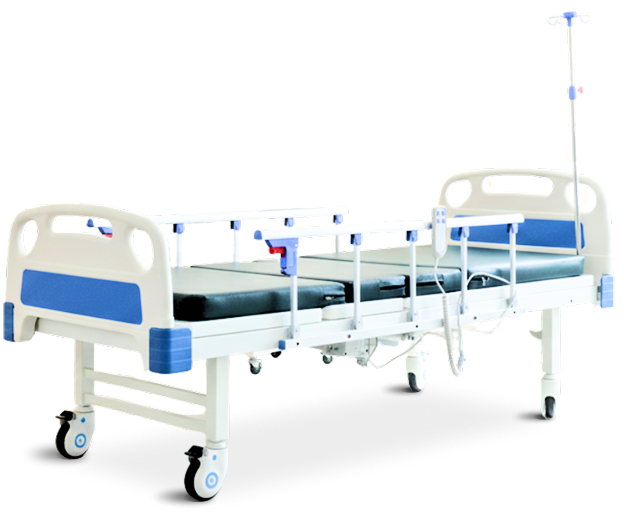
Semi-Electric Hospital Bed
- A semi-electric hospital bed motorises the backrest and knee rest while keeping height adjustment manual. The patient can reposition themselves with a handset without calling for help, but the bed still costs noticeably less than a fully motorised model.
- Best for: Home care where the patient is alert enough to use a remote and post-surgery recovery rooms.
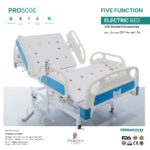
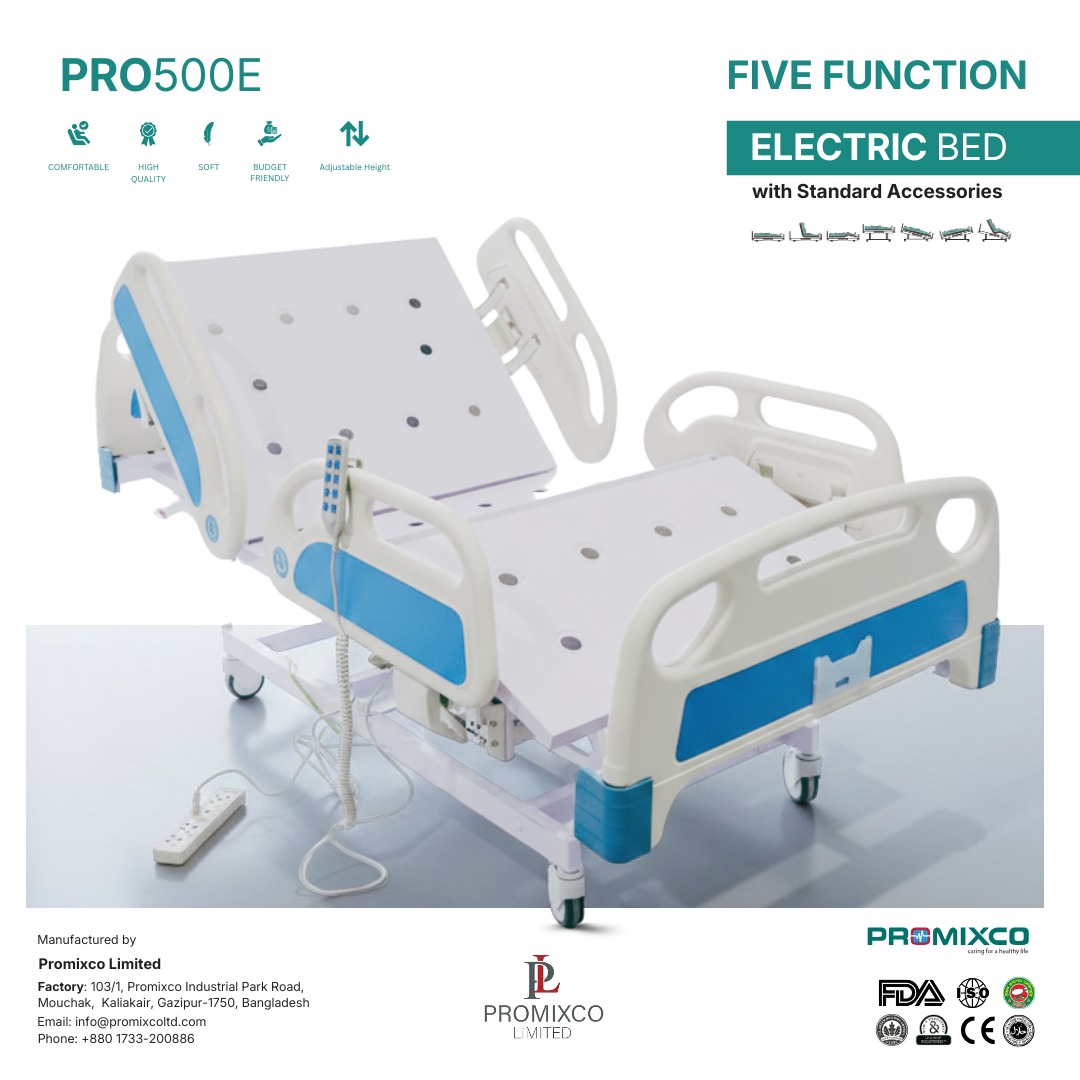
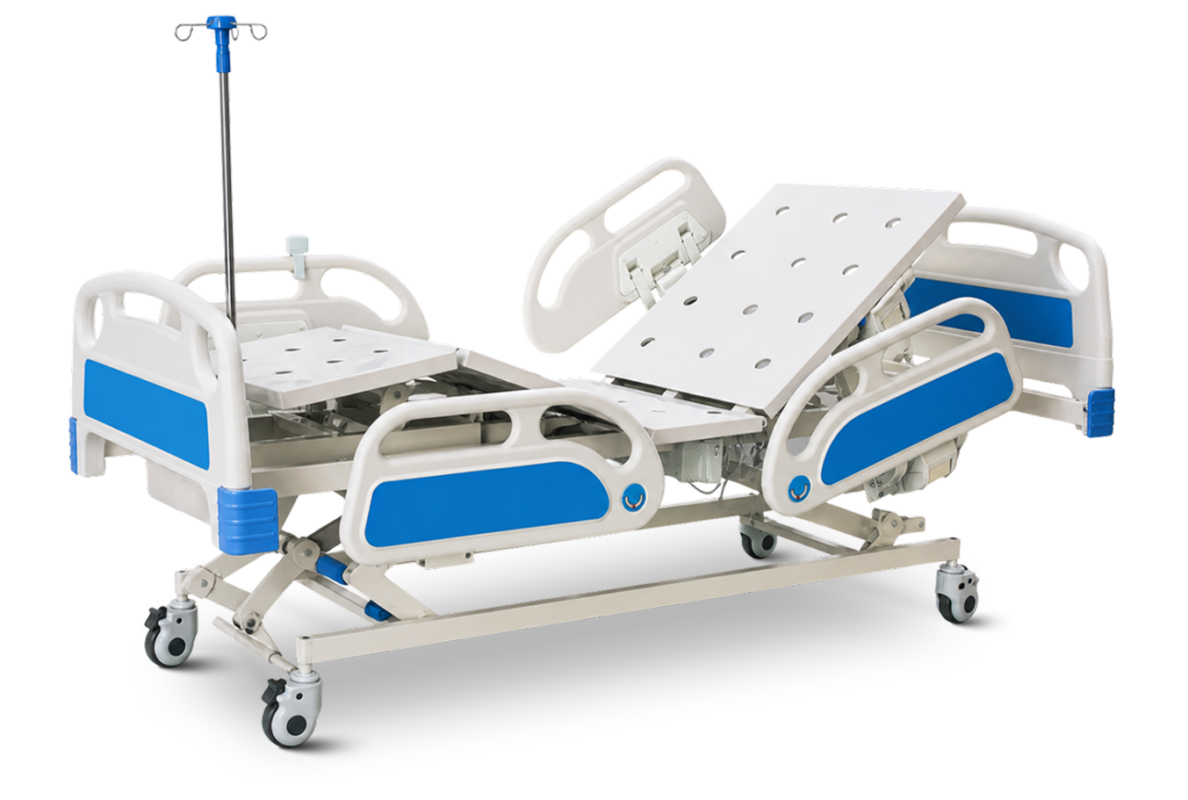
5 function hospital bed motorises backrest, knee rest, height, Trendelenburg, and reverse Trendelenburg positions. All functions run from a single remote control handset, and better models include battery backup so the bed remains usable during a power cut.
Trendelenburg (head-down tilt) and reverse Trendelenburg are clinically important — they are used to manage blood pressure, assist breathing, and reduce reflux. If the bed will be used for acute or post-operative patients, these positions matter.
Best for: ICU, CCU, HDU, private cabins, and home care for fully dependent patients.
ICU Beds
An ICU bed is a full electric bed built to a higher specification: ABS moulded head and foot panels that detach quickly for emergency access, four-section radiolucent mattress platform, integrated IV pole mounts, collapsible aluminium side rails with control panels, and central locking castors.
Many models include CPR release, which drops the backrest flat in one movemen
Best for: Intensive care, critical care, and emergency departments.
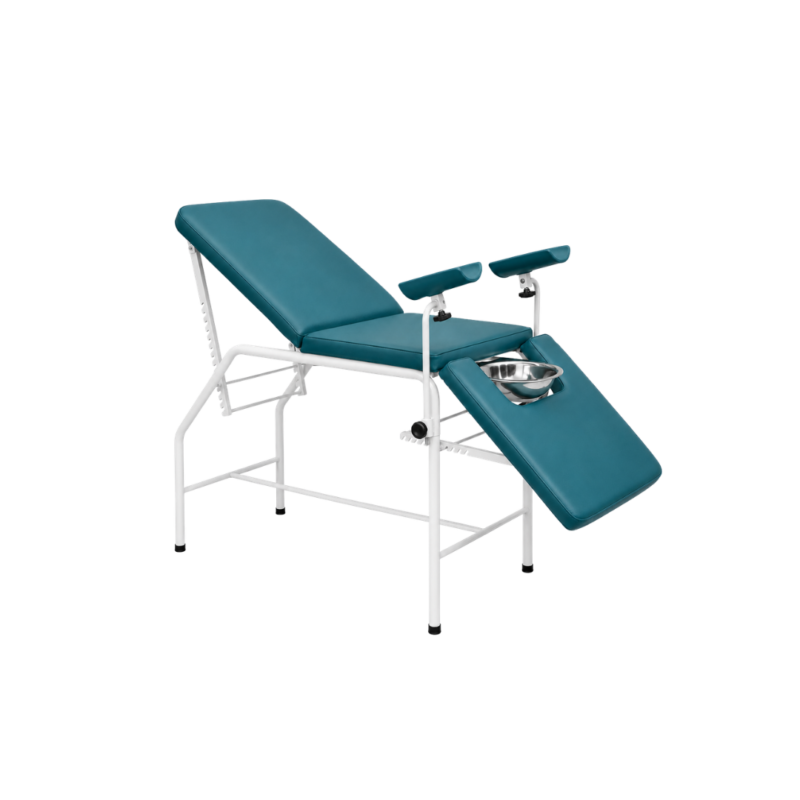
Delivery Beds
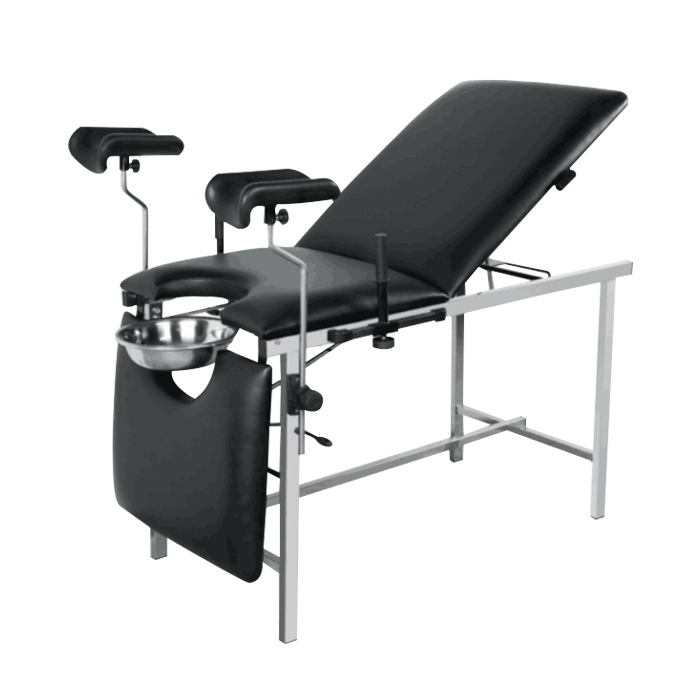
Obstetric beds are designed around the delivery process: a retractable lower section, stirrups or leg supports, a stainless steel drainage tray, and rapid height adjustment.
They are not interchangeable with general ward beds
Pediatric and Bariatric Beds
Pediatric hospital beds use higher fixed side rails and a shorter frame sized for children.
Bariatric hospital beds use a widened frame, reinforced actuators, and a load capacity typically starting at 250 kg for heavier patients.
Homecare Beds
Homecare beds are hospital beds finished to look less clinical — wooden-effect panels, quieter motors, softer lines — while keeping full articulation.
They are the usual choice for families who want medical functionality without turning a bedroom into a ward.
Key Parts and Features to Check
| Component | What to Look For |
|---|---|
| Frame | Powder-coated mild steel or stainless steel; check the coating for chips and rust resistance. |
| Head and Foot Panels | ABS moulded panels are lighter, easier to disinfect, and detach faster than steel. |
| Side Rails | Collapsible aluminium or ABS; must lock firmly and fold without pinching. |
| Mattress Platform | Perforated steel or PP moulded sections for ventilation. |
| Castors | 125 mm minimum, with central locking or at least two braked wheels. |
| Actuators | Branded linear actuators with a stated duty cycle; ask about spare availability. |
| Handset | Sealed, washable, with a lockout so patients cannot change critical settings. |
| Battery Backup | Essential in Bangladesh; confirm how many cycles it supports. |
| IV Pole Sockets | At least two corner sockets on the frame. |
Hospital Bed vs Normal Bed
A domestic bed is usually fixed in height, has no adjustable sections, and does not include safety rails. For a bedridden patient, this can create several practical challenges. The caregiver may need to bend frequently to reach the patient, pillows may not provide stable positioning, and there may be no side protection to help reduce the risk of falling from the bed at night.
The difference becomes particularly important when regular repositioning is required. A hospital bed allows caregivers to adjust the patient’s back and leg positions and make small, frequent position changes more easily. This can help reduce prolonged pressure on areas such as the sacrum, heels, and shoulders. Repositioning a patient on a completely flat domestic bed may require considerably more physical effort, especially when only one caregiver is available. Hospital Bed vs Normal Bed
A hospital bed is significantly more suitable than a normal domestic bed for patients who spend most of their time in bed because it is designed to support patient positioning, caregiver access, and safer daily care. A normal bed is generally fixed in height and does not have adjustable back or leg sections, making it difficult to change the patient’s position without using pillows or physically lifting the patient. In contrast, a hospital bed allows the backrest and leg section to be adjusted according to the patient’s needs, while side rails can provide additional protection against accidental falls. The adjustable height of many hospital beds also makes it easier for caregivers to assist with feeding, cleaning, dressing, transferring, and other routine activities without constantly bending over. This can be particularly helpful when caring for a dependent patient for long periods. Hospital beds can also make regular repositioning easier, which is important for patients who have limited mobility and spend extended periods in bed. Depending on the model, features such as electric adjustment, battery backup, locking castors, IV pole sockets, and adjustable side rails can further improve convenience and safety. For short-term use or for patients who are mobile, a normal bed may be sufficient, but for bedridden or highly dependent patients, a properly selected hospital bed can provide a much more practical and supportive solution for both the patient and caregiver.
Standard Hospital Bed Dimensions and Weight Capacity
Most hospital beds available in Bangladesh follow broadly similar dimensions, although exact measurements vary by manufacturer and model:
- Overall length: 200–215 cm
- Overall width: 90–105 cm
- Mattress platform: Approximately 190 × 90 cm
- Height range (hi-low models): Approximately 45–75 cm
- Backrest elevation: 0–75°
- Knee rest elevation: 0–40°
- Safe working load: Approximately 150–250 kg, depending on the model
Always check the safe working load (SWL) rather than looking only at the frame’s maximum load. The safe working load generally accounts for the patient, mattress, and supported accessories.
Before ordering, measure your doorways, corridors, stairways, and lift if applicable. For example, a 105 cm wide bed may not pass through a 90 cm doorway when fully assembled. In many homes, the bed may need to be delivered in separate parts and assembled inside the room.
How to Choose a Hospital Bed for Home Use
- Assess patient mobility: A patient who can change position independently may only need a 3-function manual bed. A fully dependent patient may benefit from a full-electric bed with height adjustment.
- Consider the number of caregivers: If one caregiver is responsible for a heavy or dependent patient, electric height adjustment can make patient transfers and daily care significantly easier.
- Check the power situation: If load shedding is frequent in your area, consider a hospital bed with battery backup or choose a semi-electric model.
- Budget for the mattress separately: The bed frame is only part of the complete setup. A suitable medical mattress is also important for patient comfort and support.
- Confirm after-sales service: Motors, handsets, and other mechanical or electrical components may require servicing or replacement. Choose a supplier that can provide spare parts and after-sales support.
- Plan the room: Leave at least 90 cm of clearance on one long side for patient transfers and around 60 cm at the foot of the bed.
What Determines Hospital Bed Price in Bangladesh
Hospital bed prices in Bangladesh can vary widely. The same “3-function hospital bed” description can cover products with significantly different specifications, materials, features, and quality levels. The main factors that determine the price include:
- Number of functions: Each additional motorised function generally increases the cost of the bed.
- Manual vs. electric: Electric beds typically cost more than comparable manual models because they include motors, actuators, control systems, and electrical components.
- Frame material and finish: Stainless steel and thicker-gauge steel generally cost more and can provide better durability when properly manufactured and maintained.
- Actuator brand: Branded linear actuators may increase the initial price but can offer better reliability and easier access to replacement parts.
- Panel material: ABS moulded panels generally cost more than painted steel panels but are lighter and easier to clean and disinfect.
- Locally manufactured vs. imported: Locally manufactured beds can reduce transportation and lead times and may make spare parts and servicing easier to access. Imported models may offer specific certifications or features.
- Order volume: Hospitals, clinics, and institutions purchasing in larger quantities may receive lower per-unit pricing.
- Included accessories: Mattresses, IV stands, overbed tables, and other accessories may be quoted separately. Always check exactly what is included in the listed price.
Hospital Bed Price in Bangladesh:
| Hospital Bed | Type | Functions | Current Price (BDT) |
|---|---|---|---|
| Two Function Manual Hospital Bed | Manual | 2 Function | ৳23,000 |
| Three Function Manual Bed | Manual | 3 Function | ৳36,000 |
| Two Function Electric Bed | Electric | 2 Function | ৳37,500 |
| Three Function Electric Bed | Electric | 3 Function | ৳56,500 |
| Five-Function ICU Bed – Premium | Electric | 5 Function | ৳125,000 |
| Five-Function ICU Bed – Standard | Electric | 5 Function | ৳130,000 |
Prices are based on the current listings on PROMIXCO’s website and may change depending on model, accessories, availability, and order quantity. Please contact PROMIXCO for the latest quotation and institutional or bulk pricing.
Note: The prices shown above are product-listing prices. VAT, tax, transportation, installation, and other applicable charges may be quoted separately depending on the order and delivery location.
Accessories You May Need
- Mattress: A standard foam mattress suits short-term use. For patients bedridden longer than a few weeks, an alternating pressure air mattress substantially reduces bedsore risk.
- Overbed table: Allows eating and reading without transfer.
- Bedside locker: Keeps medication and personal items within reach.
- IV stand: Corner-mounted or floor-standing.
- Bed pan and commode attachment: Some beds include a commode cut-out section.
- Patient lifting pole (monkey pole): Lets a patient with upper body strength reposition themselves.
Cleaning and Maintenance
- Wipe the frame, rails, and handset daily with a hospital-grade disinfectant. Avoid spraying liquid directly onto motors or control boxes.
- Check castor brakes weekly and clear hair and thread from the wheel housings monthly, since these are the most common cause of a bed rolling when locked.
- Every six months:
- Inspect the actuators for noise or hesitation.
- Check that all rail locks engage fully.
- Confirm the battery still holds a charge.
- Keep the manual and model number accessible.
- Spare parts are often model-specific, so keeping the exact model information available can make repairs easier.
Hospital Bed Buying Checklist
- Written specification listing all functions, dimensions, and safe working load
- Frame material and coating type confirmed in writing
- Actuator make and duty cycle
- Warranty period, including whether it covers motors separately from the frame
- Local spare parts availability and typical turnaround
- Delivery, room-level assembly, and installation included or quoted
- Certification documents where required for tender or institutional supply
- Payment terms and lead time
Frequently Asked Questions About Hospital Beds
What is the difference between a 3 function and 5 function hospital bed?
A 3 function bed adjusts three things: backrest elevation, knee rest elevation, and overall bed height.
A 5 function bed adds Trendelenburg and reverse Trendelenburg — head-down and head-up whole-body tilt. Those two extra positions are clinical rather than comfort features.
Trendelenburg is used to support circulation and blood pressure, and reverse Trendelenburg helps with breathing difficulty and acid reflux.
For a general ward or a stable home-care patient, 3 function is usually enough. For ICU, CCU, post-operative recovery, or any patient whose condition can change quickly, choose 5 function.
Can a hospital bed be used at home?
Yes, and it is increasingly common in Dhaka and other cities.
Homecare beds are built specifically for domestic use with quieter motors and less clinical-looking panels, but a standard hospital bed works in most bedrooms too.
Three practical checks before ordering:
Measure the doorway and stairwell, since the bed will arrive in parts and be assembled in the room.
Leave at least 90 cm of clear space on one long side for transfers.
Confirm the room has a reliable power point within reach if you are buying an electric model.
Do I need an electric hospital bed, or is manual enough?
Base the decision on who does the lifting.
If the patient has upper-body strength and can shift position with minimal help, a 3 function manual bed handles the job at a much lower price.
If the patient is fully dependent, or one person is managing care alone, electric height adjustment stops being a luxury — bending over a fixed-height bed several times a day is the most common cause of caregiver back injury.
Semi-electric is a reasonable middle ground when budget is tight but the patient needs to sit up frequently.
What is the standard size of a hospital bed?
Most models sold in Bangladesh measure roughly 200–215 cm long and 90–105 cm wide overall, with a mattress platform around 190 × 90 cm.
Hi-low frames typically travel between 45 cm and 75 cm.
Bariatric and pediatric beds fall outside these figures, so always ask for the exact drawing before ordering in quantity — a 15 cm difference in width decides whether two beds fit in a cabin or only one.
How much weight can a hospital bed hold?
Standard beds are rated for a safe working load of 150–250 kg. Bariatric models start higher.
Read the specification carefully: safe working load includes the patient, the mattress, bedding, and any accessories mounted on the frame, so the usable patient weight is always lower than the headline number.
Beds pushed past their rating develop actuator failure and frame flex long before anything visibly breaks.
Can I rent a hospital bed instead of buying?
Rental makes sense for short recovery periods — a few weeks after surgery, or while waiting for a purchased bed to arrive.
Beyond roughly three to four months, rental payments usually exceed the purchase price of an equivalent manual bed.
Rental also gives you no control over condition or hygiene history, so inspect the frame, rails, and mattress before accepting delivery, and confirm who is responsible for repairs during the rental period.
What happens during a power cut?
This matters more in Bangladesh than in most markets.
Full electric beds fitted with battery backup keep working for a limited number of position cycles — ask the supplier how many, not just whether a battery exists.
Beds without backup are frozen in whatever position they were last set to, unless they include a manual emergency release.
Confirm the release exists and that your caregivers know how to use it.
Semi-electric beds sidestep the problem partly, since height stays crank-operated.
Which mattress should I use with a hospital bed?
Match the mattress to the platform size and to the bed’s articulation — an ordinary stiff mattress will not fold cleanly at the backrest and knee break, which defeats the purpose of the bed.
Standard high-density foam is fine for patients who are mobile enough to shift themselves.
For anyone bedridden longer than two or three weeks, an alternating pressure air mattress is strongly recommended, because it redistributes pressure automatically and cuts bedsore risk substantially.
How do I prevent bedsores in a patient using a hospital bed?
The bed helps, but it does not do the job alone.
Reposition the patient roughly every two hours, using the backrest and knee adjustments to vary pressure points rather than lifting each time.
Keep the backrest below 30° where possible, since a steeply raised backrest slides the patient down and shears the skin over the sacrum.
Keep bedding dry and wrinkle-free, inspect the heels, hips, shoulders, and tailbone daily, and use a pressure-relieving mattress for long-term cases.
Are side rails safe, and should they always be raised?
Side rails prevent falls, but permanently raised rails can cause entrapment injuries, especially with confused or restless patients.
Raise them during sleep, transport, and whenever the patient is unattended in a raised position. Lower them for transfers and when a caregiver is present.
Check that the rails lock firmly at full height, that there are no gaps wide enough for a limb or head, and that the folding mechanism does not pinch fingers.
What is the difference between an ICU bed and a general ward bed?
An ICU bed is a full electric bed built to a higher standard:
Quick-release ABS head and foot panels for emergency access
Four-section radiolucent platform allowing X-rays without moving the patient
CPR release that drops the backrest flat in one motion
Integrated IV pole mounts
Central locking castors
A general ward bed prioritises durability and cost over rapid clinical intervention.
They are not interchangeable in a critical care setting.
Should I buy a locally manufactured or imported hospital bed?
Locally manufactured beds usually win on delivery time, price, and — most importantly — spare parts.
When an actuator or handset fails two years in, a locally made bed can often be back in service within days, while an imported model may wait weeks for a part.
Imported beds may carry certifications required for certain tenders and institutional procurements.
If you are buying for a tender, check the certification requirement first; if you are buying for a ward or a home, weigh service availability heavily.
What warranty should I expect on a hospital bed?
Ask for the warranty broken down by component, not as a single figure.
Frames commonly carry a longer warranty than motors, and motors are what actually fail.
A reasonable arrangement is a multi-year frame warranty with at least one year on actuators, control boxes, and handsets.
Get the terms in writing, confirm whether service is on-site or return-to-workshop, and ask what the typical repair turnaround is.
How do I clean and disinfect a hospital bed properly?
Wipe the frame, rails, panels, and handset daily with a hospital-grade disinfectant on a damp — not soaking — cloth.
Never spray liquid directly onto motors, control boxes, or handset connectors.
Clear hair and thread from the castor housings monthly, as tangled wheels are the most common reason a bed rolls even when the brakes look engaged.
Every six months, check the actuators for hesitation or unusual noise, test every rail lock, and confirm the battery still holds charge.
How long does delivery and installation take?
For in-stock single units, expect delivery within a few days in Dhaka and slightly longer outside the city.
Institutional or tender quantities are typically manufactured to order, so ask for a written lead time.
Before ordering, confirm whether the quotation includes:
Carriage to the room
Assembly on site
Functional handover demonstration
Or whether it only includes delivery to the ground floor.
The difference matters a great deal in buildings without a service lift.
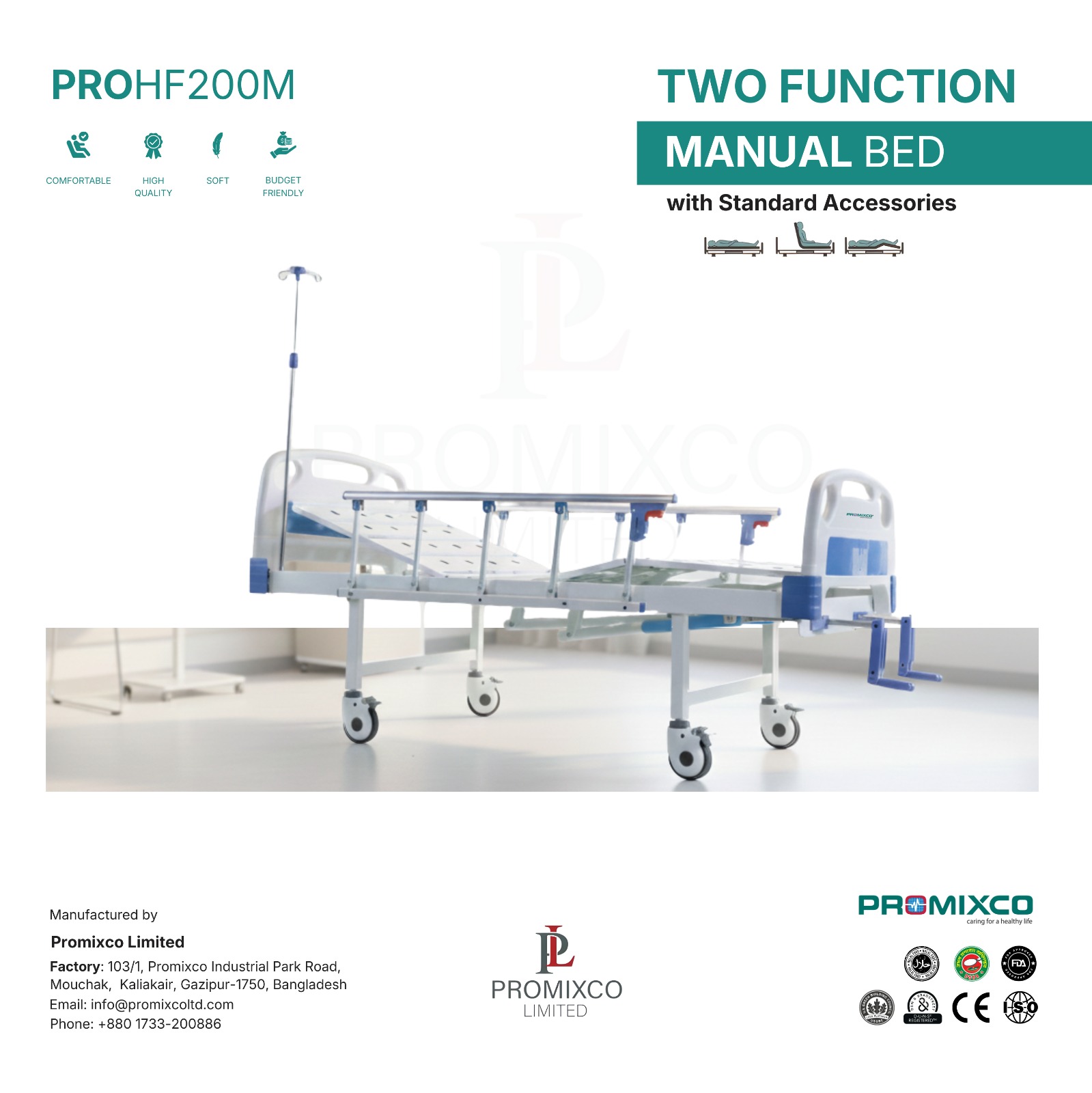
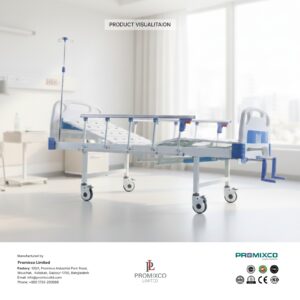
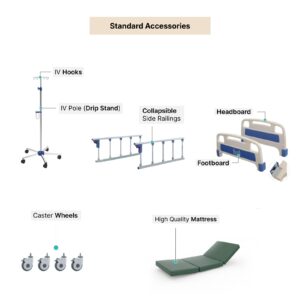

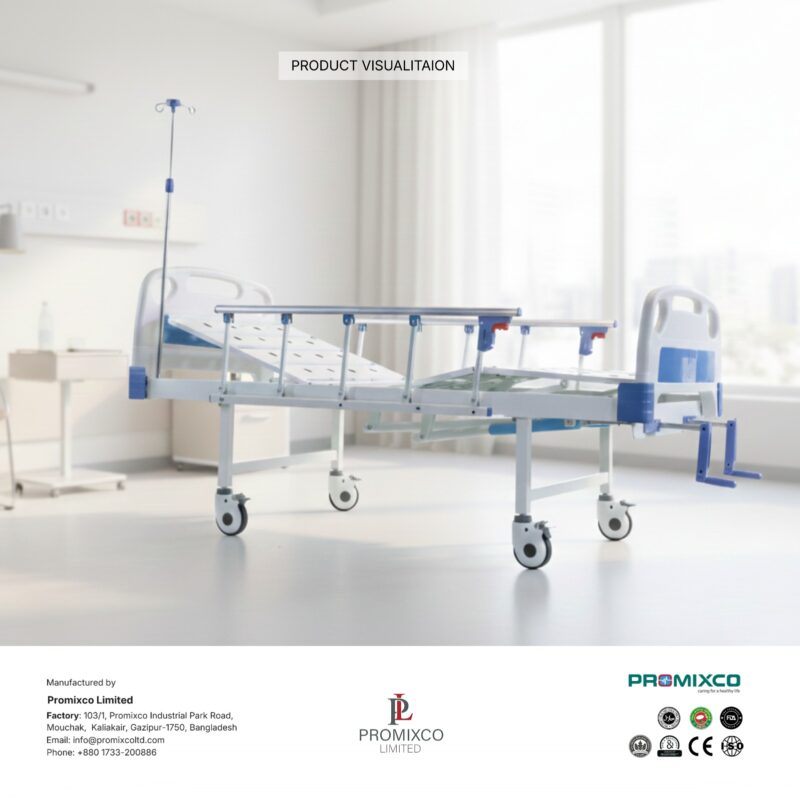
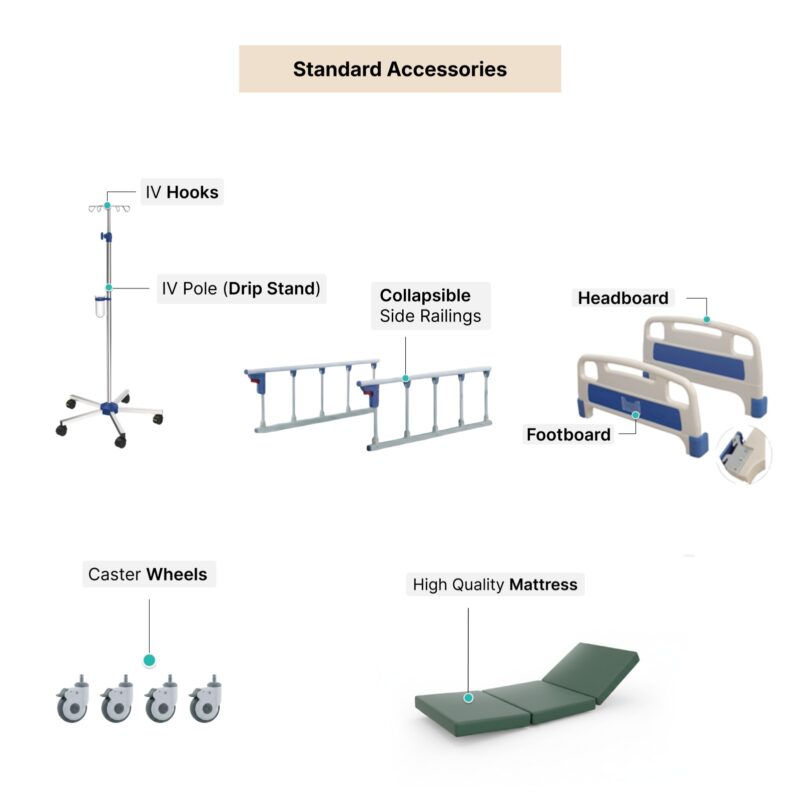

Two Function Manual Hospital Bed with Standard Accessories
TECHNICAL SPECIFICATION
- .
- Size: L-2000 x W-900 x H-500 mm
- Standard Two Function Manual ICU Bed with mechanically operated backrest 80 degree and knee rest70 degree by super smooth crank mechanism.
- Bed frame made from mild steel rectangular tubes. head and leg guard made by ABS materials. 5 sticks collapsible side rails.
- Individual Locking Castors dia 125mm.
- Net weight: 48 +- 2
- Gross Weight: 54 +- 2
- Load Barring Capacity:200 KG
- Warranty: 1 Year
STRANDED ACCESSORIES:
- Waterproof Mattress
- One adjustable IV pole is provided with the bed
In Stock
Sorry, its not a product page. Please use this shortcode only on your product page.